If you reduce Google I/O 2026 to just another wave of AI announcements, you miss the real story. What Google showed was not simply a stronger Gemini. It was Gemini moving out of its own corner and becoming a layer spread across the products where people already search, browse, work, and build.
That is the most useful way to read the event. Instead of treating each launch as a separate headline, it makes more sense to look at the larger architecture. Google used I/O to show Gemini shifting from a standalone interface into usage infrastructure — an agentic layer distributed across much of the company’s product surface.
You could see that pattern in Search, the Gemini app, Android, Chrome, and the developer stack. Taken together, those pieces make Google’s direction clear. The company is not only trying to prove that it has a powerful model. It is trying to place that model where it can understand context, take action, and carry tasks forward without starting over at every interaction.
That is the deeper shift. The debate is moving away from which assistant gives the best answer and toward which company can turn AI into action inside products already used by billions of people.
The event’s throughline was AI with agency
Google’s own framing pointed that way. Sundar Pichai described the moment as the “agentic Gemini era,” with AI becoming less confined to the lab and more embedded in everyday use. According to Google, the company is now processing more than 3.2 quadrillion tokens per month, seven times more than a year ago.
The number matters less than where that capacity is being connected. Rather than centering the story on a single app, Google presented a broader design in which the model becomes operational infrastructure for search, operating systems, browsers, and creative tools.
That changes the terms of the debate. The key question is no longer, “Which chatbot answers better?” It is, “Which platform can turn reasoning into action inside products already used by billions?”
Search became the center of the strategy
Search may be the clearest example of this transition. Google said AI Overviews now reach more than 2.5 billion monthly active users. During the keynote, the company also said AI Mode had crossed 1 billion monthly active users.
The bigger story, though, is the type of experience Google is building. AI Mode was presented as a conversational search layer with follow-up, query fan-out, Deep Search, live camera features, and stronger agentic capabilities. Search is no longer being framed as a place to retrieve links or short answers. It is starting to behave more like a system for investigation, refinement, and context-aware execution.
There is still an important caveat. Google’s own materials call for caution around geography, rollout timing, and availability. So the right conclusion is not that every feature is already live everywhere. It is that Google wants Search to become the main entry point for its agentic AI strategy.
Gemini 3.5 was the clearest message to developers
If Search shows the agentic layer from the user side, Gemini 3.5 shows the same ambition from the builder side. Google launched Gemini 3.5 starting with 3.5 Flash and framed it with a blunt line: “frontier intelligence with action.”
The focus was coding, agents, and long-horizon tasks. According to Google, Gemini 3.5 Flash outperforms Gemini 3.1 Pro on several benchmarks and runs four times faster than other frontier models. Gemini 3.5 Pro was mentioned for rollout the following month, not as immediate general availability.
For developers, the message is simple: the model is not being sold only as a chat engine. It is being positioned as the base for systems that need to reason, use tools, and complete tasks more autonomously.
Antigravity and Managed Agents reveal the real ambition
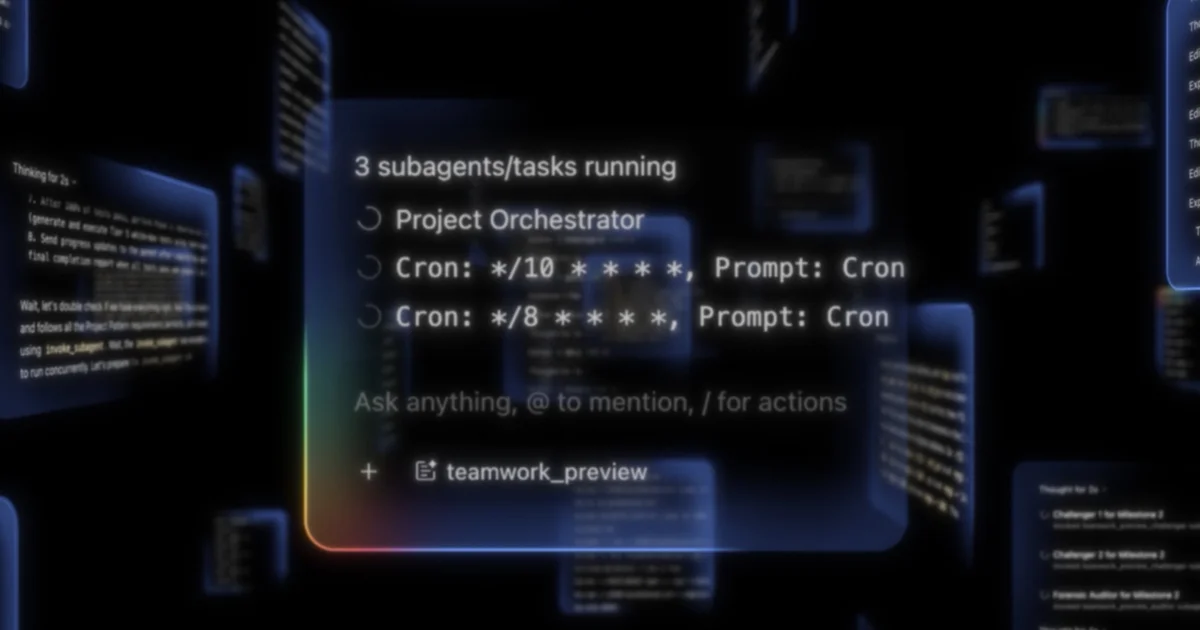
The strongest signal beyond the keynote polish came from developer tooling. Antigravity 2.0 was presented as an agent-first platform for turning an idea into a ready application. Managed Agents in the Gemini API push that idea further. With a single call, a developer can spin up an agent with reasoning, tool use, and code execution inside an isolated, ephemeral Linux environment, with behavior shaped through files such as AGENTS.md and SKILL.md.
This is where the platform shift becomes tangible. Google is trying to reduce the distance between model, orchestration, and execution. Instead of offering only base intelligence and leaving the rest to third-party frameworks, it wants to provide a more operational infrastructure for agents.
The Gemini app, Android, and Chrome all point in the same direction
The Gemini app also took on a different role. According to the briefing, it grew from 400 million to more than 900 million monthly users in a year. More important than the number is the product direction. Daily Brief was described as a personalized daily briefing connected to apps. Gemini Spark was presented as a 24/7 agent for background tasks with Workspace integration. Gemini Omni was introduced as a multimodal video generation and editing feature for paid subscribers.
Taken together, those features show the app moving beyond one-off prompt responses. It is being designed to anticipate routines, move across connected apps, and continue work over time.
Android showed the same logic at the system level. The Android Show 2026 centered on Gemini Intelligence as a proactive layer built into the experience rather than added later. In Chrome for Android, Google said the browser will gain Gemini with auto-browse features for summaries, questions, image editing, and agentic tasks, with confirmation for sensitive actions. That points to a browser that is no longer just a window to the web, but an intermediary for getting things done.
Googlebook was announced as a new laptop category designed around Gemini Intelligence, while Android XR demos showed Gemini in headsets and glasses for live translation, messaging, directions, and hands-free actions. Not all of this should be read as broad immediate availability, but the direction is unmistakable: Google wants Gemini spread across devices and interfaces where local context, browsing, voice, camera input, and action matter most.
This was less about generative AI than operational AI
The biggest news at Google I/O 2026 was not a single feature. It was the stitching together of model, agent, product, operating system, search, and browser.
That raises the competitive bar. Much of the generative AI race has been framed around benchmarks, context windows, and answer quality. Google is signaling a more practical contest. The winner will not simply be the company with the best responses. It will be the one that gets AI into real usage flows, with accumulated context and the ability to act.
For product teams, that means advantage no longer lives only in the app interface. For developers, the job is no longer just calling a model through an API. It now includes tool use, execution, operational memory, and security design. For Google itself, the next challenge is execution: turning a coherent architecture into a consistent experience users trust enough to let act on their behalf.
That is why I/O 2026 felt less like a showcase for generative AI and more like a statement about operational AI. Gemini is no longer just Google’s assistant. It is becoming the layer Google wants to place between user intent and completed work.