The most interesting AI stories in 2026 are not the ones that look impressive in a demo. They are the ones that land inside a slow, expensive queue and make that queue move.
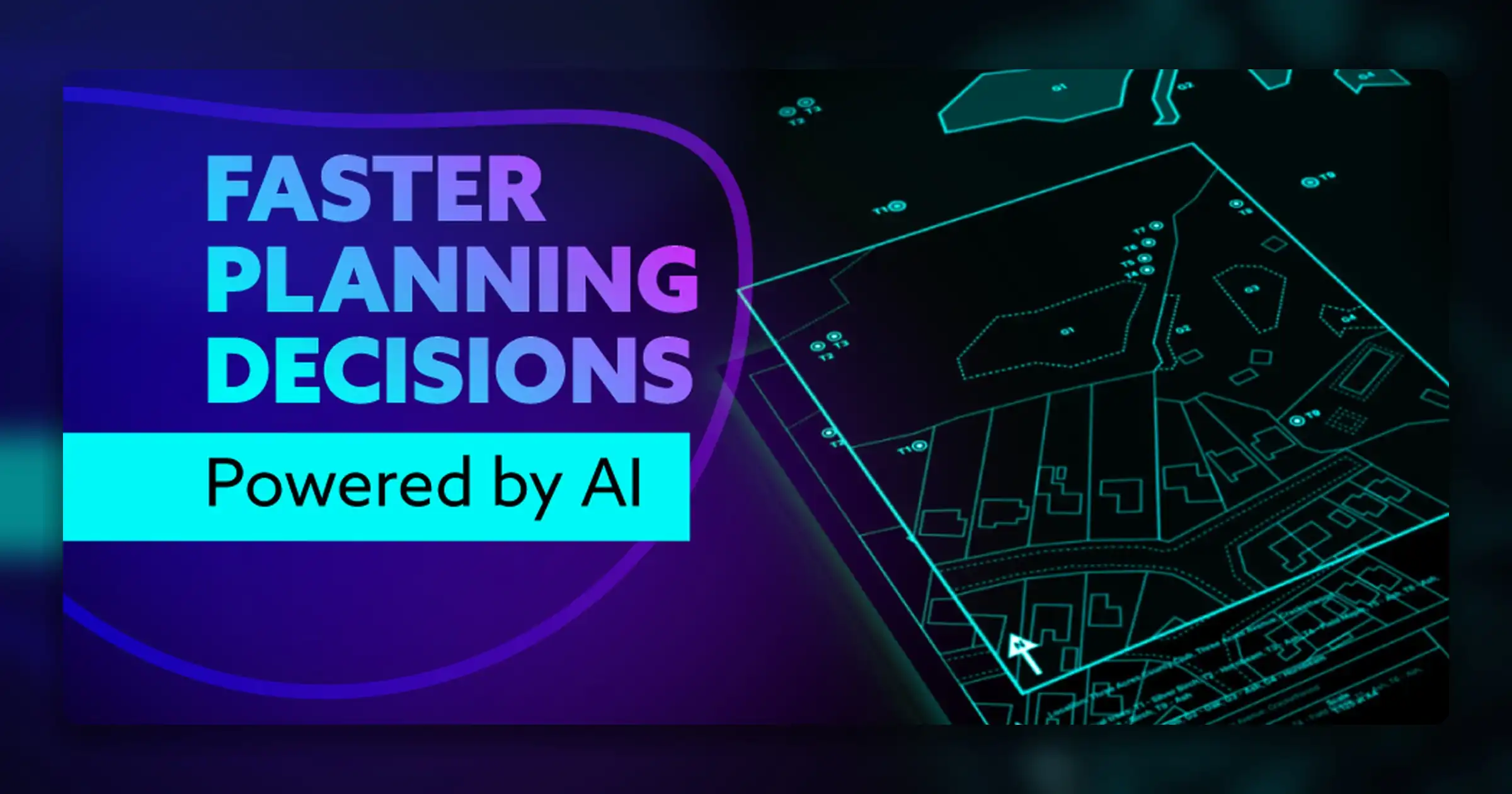
That is why the new planning-approval prototype built by the UK government with Google DeepMind, Google Cloud, Faculty and local planning authorities matters. On the surface, it is a narrow administrative tool. It is being tested on householder planning applications, the kind used for loft conversions, home extensions and other common residential changes. In the government’s framing, the goal is simple: cut a typical review from eight weeks to four.
That target is modest enough to sound unglamorous. It is also exactly why the project is worth taking seriously.
Public-sector AI usually gets discussed at the level of ambition. Better services. Smarter government. Digital transformation. This prototype sits at a lower, more concrete level. It is aimed at a specific backlog, a specific class of documents and a specific group of workers who spend too much time reading, sorting and summarising routine cases.
That is where AI starts to become operational.
what the prototype actually does
According to the UK government, the prototype is in early-stage testing with Barnet, Camden and Dorset councils. It does not issue approvals on its own. It triages incoming applications, summarises the key information and produces an initial assessment for planning officers to review.
That distinction matters.
The system is not presented as an automated decision-maker. It is closer to a structured drafting and prioritisation layer that sits upstream of the formal decision. If it works as advertised, it should reduce the administrative time spent on straightforward cases and give officers a faster first pass through the material.
The government says householder applications account for nearly 70% of planning applications each year. That is a striking number because it explains the operational logic. The prototype is not starting with the hardest planning disputes or the biggest infrastructure calls. It is starting with the high-volume end of the queue, where repetition is common and where shaving time from each case can compound across the system.
This is a familiar pattern in useful enterprise AI. You do not begin with the most politically sensitive judgment. You begin with the paperwork around it.
There is a second tool in the same push, called Extract, now available to councils across England. Extract uses Gemini’s multimodal capabilities to turn old planning records, maps and handwritten notes into structured digital data. Google and the UK government both frame it as a foundation layer. Before a planning workflow can move faster, the underlying records need to be legible, searchable and machine-usable.
That pairing is important. One tool helps convert legacy planning material into data. The other helps officers work through active applications faster. In other words, this is not just a chatbot dropped into a bureaucracy. It is an attempt to improve both the archive and the queue.
why this is more interesting than another AI assistant
There is a reason so many AI announcements blur together. A lot of them describe systems that can help, assist or support without saying what would change on an actual workday.
This one gives a clearer answer.
The UK government is attaching the prototype to a measurable service outcome. The headline number is a reduction from eight weeks to four for an average householder application. Whether the project reaches that mark at scale is still an open question, but the fact that the target exists changes the category of the story. It turns the prototype into an operational claim.
That is a healthier way to think about public AI.
Instead of asking whether a model sounds smart, ask what queue it shortens. Ask what document burden it removes. Ask whether trained staff now spend more time on exceptions and less time on formatting, retrieval and first-draft synthesis.
The UK’s planning prototype has that shape. It is aimed at a workflow where skilled people are scarce, document handling is messy and delays have visible consequences for ordinary citizens. Waiting two months for a routine home-improvement decision is not a civilisational crisis, but it is exactly the kind of friction that makes institutions feel slow and brittle.
AI becomes more politically durable when it solves those ordinary frustrations instead of promising a wholesale reinvention of the state.
the human-in-the-loop point is not just PR
Both Google DeepMind and the UK government stress that qualified planning officers remain responsible for the decision. If the system succeeds, every assessment is still meant to be reviewed and approved by a human planner before anything is decided.
It is easy to dismiss that language as standard reassurance. In this case, it is central to whether the approach makes sense.
Planning decisions are not only technical. They sit inside local rules, messy documentation, context that may not fit neatly into templates, and judgment calls that can become contentious. A model may be good at surfacing relevant information or drafting a preliminary assessment, but that is not the same as understanding every local nuance or bearing public accountability for the outcome.
Human review also creates a more realistic deployment path. Governments are far more likely to adopt AI that reduces clerical drag than AI that tries to remove professional discretion altogether. The easier political sale is not replacement. It is throughput.
That may sound less radical, but it is probably where much of the real value will be found over the next few years.
the limits are still obvious
None of this means the hard part is solved.
A prototype that performs well on routine householder applications may still struggle when files are incomplete, local records are inconsistent or the application sits near the border between straightforward and sensitive. Administrative systems are full of edge cases, and planning is no exception.
There is also the old problem of standardisation. AI systems tend to look better in environments where inputs are relatively clean and expectations are relatively stable. Local government rarely offers either. Councils vary in process maturity, record quality and digital capacity. A tool that helps one authority may create less value in another if the underlying data is weaker or the local workflow is harder to structure.
Then there is the accountability question. Once officers begin relying on machine summaries and provisional assessments, the quality of review becomes crucial. Human-in-the-loop only works if the human has enough time, confidence and institutional backing to challenge the machine when it is wrong. Otherwise the review stage can drift into rubber-stamping.
This is where public-sector AI projects often live or die. Not at the model layer, but in the operating discipline around it.
why it matters beyond the UK
The deeper significance of this project is not specifically British housing policy. It is the template.
Most governments have a long list of services with the same structural features: too much paper, too many fragmented records, too few specialists and too much time lost to triage, summarisation and low-level administrative assembly. Planning is one example. Permitting, licensing, inspections, benefits processing and regulatory review are full of similar patterns.
That is why this prototype is worth watching outside the UK. It shows a more mature frame for AI adoption in government.
Not AI as a talking point. AI as queue management.
Not AI replacing the state. AI helping the state clear repetitive work so trained staff can spend more time where judgment is actually needed.
Not a moonshot. A throughput tool.
If that sounds mundane, it is because mundane is where institutional technology proves itself. The systems that matter most are often the ones that remove twenty minutes here, three days there, one round of document hunting somewhere else. Over time, those small gains change service quality more than a spectacular demo ever will.
The UK government says a nationwide rollout could happen by 2027 if testing goes well. That is still a conditional future, and the usual cautions apply. Prototype results do not automatically survive contact with national scale. But the direction is telling.
AI is moving out of the chat window and into the backlog.
That may end up being the more important transition.