When an AI company launches a new feature, the market usually watches the demo first. With Claude Design, that is only the visible layer.
What Anthropic announced in April was not just a tool for creating slides, wireframes, or prototypes by talking to Claude. The launch points to a broader ambition: moving Claude out of the role of smart chat partner and into a creative workflow that includes visual creation, collaboration, brand consistency, and handoff to implementation.
That shift matters because it changes Claude’s position. Chat is an interface. Workflow is territory.
What Anthropic actually launched
In the official announcement, Anthropic describes Claude Design as a new Anthropic Labs product for creating “designs, prototypes, slides, one-pagers, and more.” The key point is that it is not framed as a loose image generator or as a chatbot that merely suggests visuals in text.
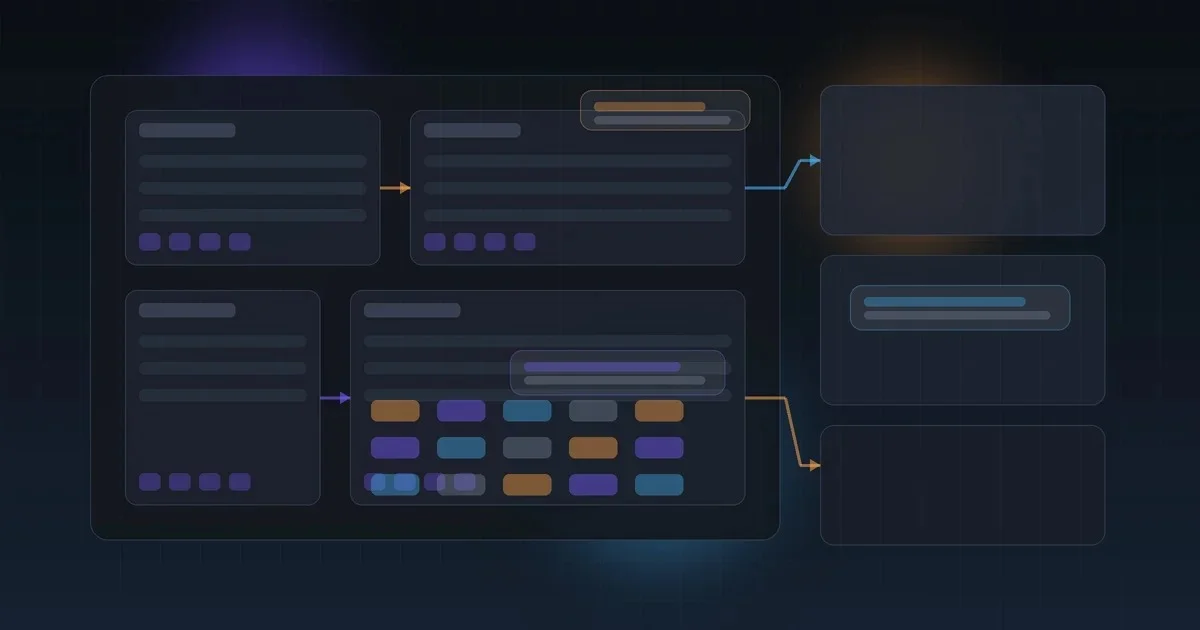
The workflow is more concrete. You ask for a visual asset, Claude generates a first version, and then the work continues through inline comments, direct editing, conversation-based refinement, and controls for spacing, color, and layout. Anthropic also says projects can be exported to PDF, PPTX, HTML, and Canva.
That alone would already place Claude Design in a different category from a chat interface with attachments. But the bigger signal is what surrounds the artifact.
Anthropic says Claude Design can read a company’s codebase and design files during onboarding to build a design system. From there, Claude can apply brand colors, typography, and components automatically, while teams can maintain more than one design system when needed. When the work is ready, Claude can also generate a handoff bundle for Claude Code with a single instruction.
That detail changes the interpretation of the launch.
This is not only about AI helping someone sketch a screen. It is about connecting three moments that are usually fragmented: exploring an idea, turning it into a visual artifact people can discuss, and passing it forward to the people who will build it.
Why this is bigger than “Claude does design now”
Anthropic has already been pushing Claude beyond pure conversation. Claude Code moved the company into the development workflow. MCP extended Claude into tools and data. Anthropic Labs, introduced in January, was presented as the structure for experimenting with new product surfaces and then scaling what works.
Claude Design fits that same direction, but at a different point in the chain.
Instead of starting in code or infrastructure, it enters when an idea is still being shaped, debated, pitched, and visualized. That is the moment when product teams, designers, marketers, and founders usually pass around decks, screenshots, links, mockups, and scattered comments.
If Anthropic can occupy that space, Claude stops being only a place to ask questions. It becomes a place where teams begin visual work, refine it, and connect it to the rest of the company’s stack.
That is the strategic reading of the launch. Anthropic does not only want people to talk to Claude. It wants them to work with Claude in formats that used to sit outside the chat window.
The clearest signal is in the admin guide
The official admin guide for Team and Enterprise plans may be even more revealing than the product announcement itself.
Anthropic does not present Claude Design as a playful feature that should be turned on for everyone immediately. The guide insists that a design system should come first, before broad access. It also recommends a phased rollout: start with a small group of trusted designers and design leads, expand to the broader design team, then to product and UX, and only after that roll it out more widely.
That tells us two things.
First, Anthropic knows that generic visual generation has limited value in serious organizations. Without shared components and brand rules, the output may be usable, but it will still feel generic.
Second, the product is being designed for real governance. The guide highlights admin toggles, custom-role controls, and separation between people who can edit the design system and people who simply use Claude Design day to day.
Those details are easy to ignore when the market focuses only on interface polish. But enterprise tools do not win just because they generate something attractive. They win when they fit into process without creating disorder.
The real target is not only the designer
Anthropic lists designers, founders, product managers, marketers, and account executives among the most obvious users. That list is not accidental.
If Claude Design were aimed only at experienced designers, Anthropic would be stepping directly into a fight with Figma, Adobe, and Canva on terrain where those companies already have stronger habits, deeper tooling, and bigger ecosystems.
The more interesting opportunity is somewhere else: the moment when people without strong design training still need to make an idea concrete fast enough for internal circulation. A PM wants to show a feature flow. A founder wants to turn a rough outline into a presentable deck. A marketing team needs a quick landing page concept.
In those cases, the value is not replacing professional design software in every detail. It is reducing the cost of getting from zero to something usable.
That is a familiar AI pattern. A product does not always need to beat the specialist at maximum depth. It can win by solving the part that blocks everyone else.
The handoff to Claude Code may be the most revealing part
Among all the details in the announcement, the handoff bundle to Claude Code may be the most strategically important.
It shows that Anthropic is thinking about Claude Design less as an isolated creativity tool and more as an upstream step in software and digital production. The intended path is clear: someone creates an interface, presentation, or visual draft with Claude and then passes that package into implementation through another Anthropic product.
That bridge is difficult to build well. Generating images is not enough. Writing code is not enough. What Anthropic appears to want is control over the path between intent, visual artifact, and delivery.
If that works, Anthropic gains a stronger argument for teams that want less friction between brief, mockup, and build.
What to watch next
It is still too early to call Claude Design a new market standard. The product is in research preview, and a lot depends on the real quality of editing, design-system fidelity, collaboration, and the consistency of the handoff into Claude Code.
But the launch already allows a clear reading. Anthropic is trying to move from the text layer to a layer of visual and collaborative work. It wants Claude to help teams think, assemble, revise, share, and forward work.
That changes the kind of competition the company is entering. It is no longer competing only with other AI chat products. It is also moving toward the territory where creative teams organize work, prototype ideas, and prepare assets for execution.
If Claude Code was Anthropic’s entry into the development workflow, Claude Design looks like its attempt to enter the creative workflow that comes before it.
For a company that, until recently, was still seen mainly as a model lab with a text interface, that may be the most important signal in the announcement.
Sources
- Anthropic: Introducing Claude Design by Anthropic Labs
- Claude Help Center: Claude Design admin guide for Team and Enterprise plans
- Anthropic: Introducing Labs