GitHub’s announcement is short enough to sound smaller than it is. On July 1, the company confirmed that GitHub Models will be fully retired on July 30, 2026. Before that date, it will run scheduled brownouts on July 16 and July 23. That is a very clear message: if your team still depends on this layer, the migration window is already closing.
The important detail is that GitHub is not retiring a single side feature. It is removing the whole package: playground, model catalog, inference API, and BYOK. For teams that used GitHub Models as a structured bridge between experimentation and production, this hits workflow design much harder than the changelog’s length might suggest.
This is bigger than losing an API endpoint
For a while, GitHub Models offered something enterprises actually liked: one place to explore models, compare outputs, version prompts, run evaluations, and wire AI work into repository-centric development habits.
That matters because it lowered the coordination cost of AI adoption. A team could start with prompt iteration, save configurations into the repo, compare model behavior, and move toward automation without immediately standing up a separate platform stack for every step.
That is why the shutdown matters. GitHub is not just removing a minor convenience. It is dismantling a layer that helped connect idea, experiment, governance, and integration. The official docs describe GitHub Models as a workspace for prompt development, model comparison, evaluators, .prompt.yml collaboration, and API-based integration. Losing all of that at once changes the shape of the workflow, not just the location of a button.
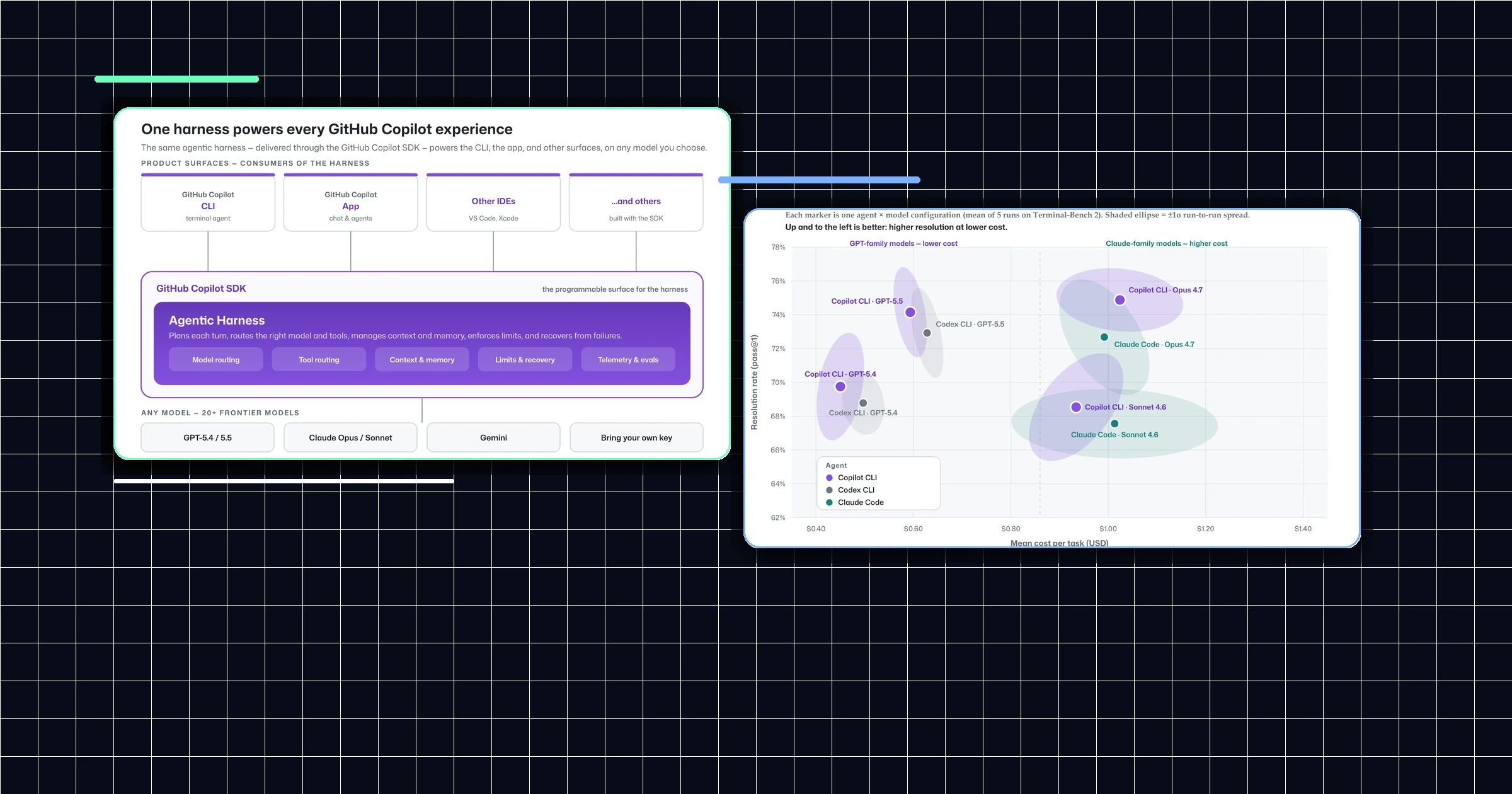
It also helps explain the broader direction GitHub has been taking. In its recent harness-focused benchmark argument, the company already started shifting the value story away from raw model access and toward the system around the model. In other words, GitHub is signaling that it no longer wants GitHub Models to be the central AI layer. It wants a different product structure.
The replacement path is not one-to-one
GitHub’s own changelog points customers in two directions.
For projects that still need model access, it recommends Azure AI Foundry. For AI-powered workflows directly on GitHub, it recommends GitHub Copilot.
That sounds straightforward until you look at what GitHub Models actually bundled together.
GitHub Models gave teams one environment for model discovery, prompt configuration, comparisons, evaluations, and programmatic integration. Azure AI Foundry can cover model access at a broader infrastructure level, but it comes with a different operating model, different governance surface, and different billing logic. Copilot covers GitHub-native AI experiences across the IDE, CLI, and adjacent workflows, but it does not occupy exactly the same role as a repo-centric model playground with evaluation and API hooks built into the same product.
So the real question is not “what replaces GitHub Models?”
The real question is which part of the old workflow now moves to which product.
For an individual developer, that may feel manageable. For platform teams, it creates at least three parallel decisions at once: architecture, governance, and cost ownership.
The brownouts are really migration drills
The scheduled brownouts on July 16 and July 23 deserve more attention than they will probably get.
They are not just courtesy warnings. They are deliberate failures designed to expose what still depends on GitHub Models before the final shutdown.
If an internal tool still routes inference through GitHub Models, or if a team still leans on BYOK inside that environment, the breakage may show up before July 30 in short windows that are easy to underestimate. From an operations perspective, that is almost like a forced chaos test.
And plenty of companies are still bad at discovering AI dependencies before an incident. They find them when a job starts returning errors, when a workflow silently stops behaving as expected, or when someone realizes a prompt-management flow no longer maps cleanly to the new runtime path.
That is one reason this announcement matters more than a typical product retirement note. The AI market spends a lot of energy talking about launches and very little talking about shutdowns. But shutdowns are often a better maturity test than launches. They reveal whether a team actually knows where model access lives, who owns policy, how prompts move through the system, and what breaks when a supposedly convenient layer disappears.
That is the same deeper lesson behind agent-risk stories like MosaicLeaks. The real risk is rarely the model alone. It is the infrastructure and workflow assumptions wrapped around it.
What changes for developers and platform teams
For developers who never touched GitHub Models directly and mostly live in Copilot, the day-to-day impact may be limited.
For teams that used GitHub Models as a bridge between experimentation and integration, the impact is much more concrete.
First, they lose a convenient repo-adjacent place for model comparison and prompt evaluation. Second, governance becomes more distributed. Third, cost visibility can get more fragmented. A team may gain flexibility in Azure AI Foundry or in other direct model-access routes, but it loses the operational simplicity of having multiple early-stage AI tasks tied together in one GitHub-native layer.
This also fits GitHub’s accelerating Copilot strategy. The company is clearly strengthening Copilot as the multi-model control plane for developer-facing AI work. You can already see that in moves like the recent expansion of Claude inside Copilot, which we covered in our analysis of Claude Sonnet 5 in GitHub Copilot. GitHub wants model choice, policy, and experience to happen more inside Copilot and less inside GitHub Models.
The catch is that not every GitHub Models use case maps cleanly onto that direction. If your workflow depended on API access, comparative experimentation, prompt versioning, and evaluation tied to the repo, then “just use Copilot” is not a full migration plan. It is only part of one.
What should be on the checklist right now
If your organization still has any dependency on GitHub Models, the checklist should already be active.
Map which repositories still store .prompt.yml files or other artifacts tied to the product. Find any inference calls that still depend on the retired API. Check whether anyone is still relying on BYOK through GitHub Models. Separate pure experimentation from developer-assistance workflows and from actual production automation.
Without that map, migration becomes noise. With it, at least you can decide where each workflow fragment belongs.
There is also a political dimension here, not just a technical one. When a platform removes a layer like this, it forces a renegotiation between engineering, security, finance, and technical leadership. Who approves providers now? Who measures AI spend? Who owns retention and access rules? Who audits prompt changes? GitHub Models had some of that conversation embedded in the product surface. Now GitHub is pushing customers toward a more split operating model.
The right reading of this shutdown
GitHub Models retiring is not the loudest AI story of the week.
But it may be one of the most revealing.
It suggests that the “let’s put a model catalog directly inside GitHub” phase is giving way to a more divided structure: Copilot as the developer-facing experience and governance layer, and other platforms for direct model access and deeper infrastructure control.
That may simplify product focus for GitHub. For customers, though, the immediate effect is different. What looks like an administrative retirement is really a structural migration.
If your team still uses GitHub Models, the mistake is to treat this as a roadmap footnote. It is not. It is a dated shutdown with brownouts and a direct effect on workflow design, cost structure, and governance ownership.
In applied AI, that kind of shutdown usually teaches more about the maturity of a team’s stack than a dozen flashy launches ever will.
Sources
- GitHub Changelog, “GitHub Models is being fully retired on July 30, 2026”
- GitHub Docs, “About GitHub Models”
- GitHub Docs, “Using GitHub Models to develop AI-powered applications in your enterprise”