The lazy version of this story is easy to write: Claude Sonnet 5 launched, it looks stronger, and now it is available in GitHub Copilot.
The useful version is a little different.
This is not just a model-release story. It is a distribution story, a migration story, and a cost-control story at the same time.
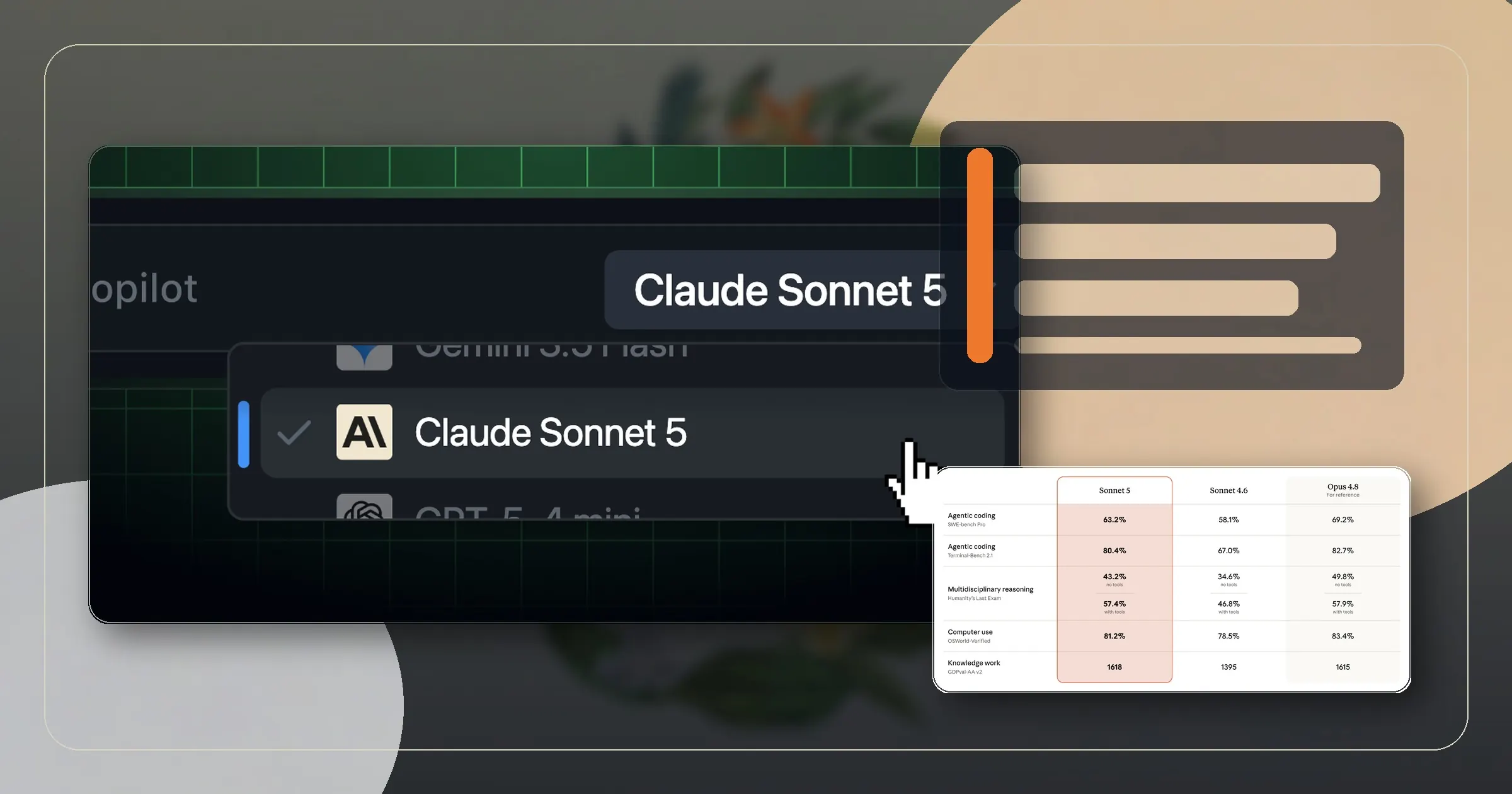
Anthropic launched Sonnet 5 on June 30 with introductory pricing of $2 per million input tokens and $10 per million output tokens through August 31. After that, pricing moves to $3 and $15. At nearly the same moment, GitHub made Sonnet 5 generally available across Copilot surfaces including the IDE, CLI, and cloud-agent layer. Once those two things happen together, the real question stops being “is the model good?” and becomes “where does it fit best in a production coding-agent stack?”
This is bigger than a new model-picker option
The obvious part of the announcement is performance. Anthropic is pitching Sonnet 5 as a more agentic Sonnet-class model, closer to higher-end capability at a lower price tier.
The less obvious part is distribution.
When GitHub adds a model like this to Copilot, it turns a vendor launch into a real operational choice for teams that already manage access, billing, policy, and workflow inside that platform. That matters more than it sounds.
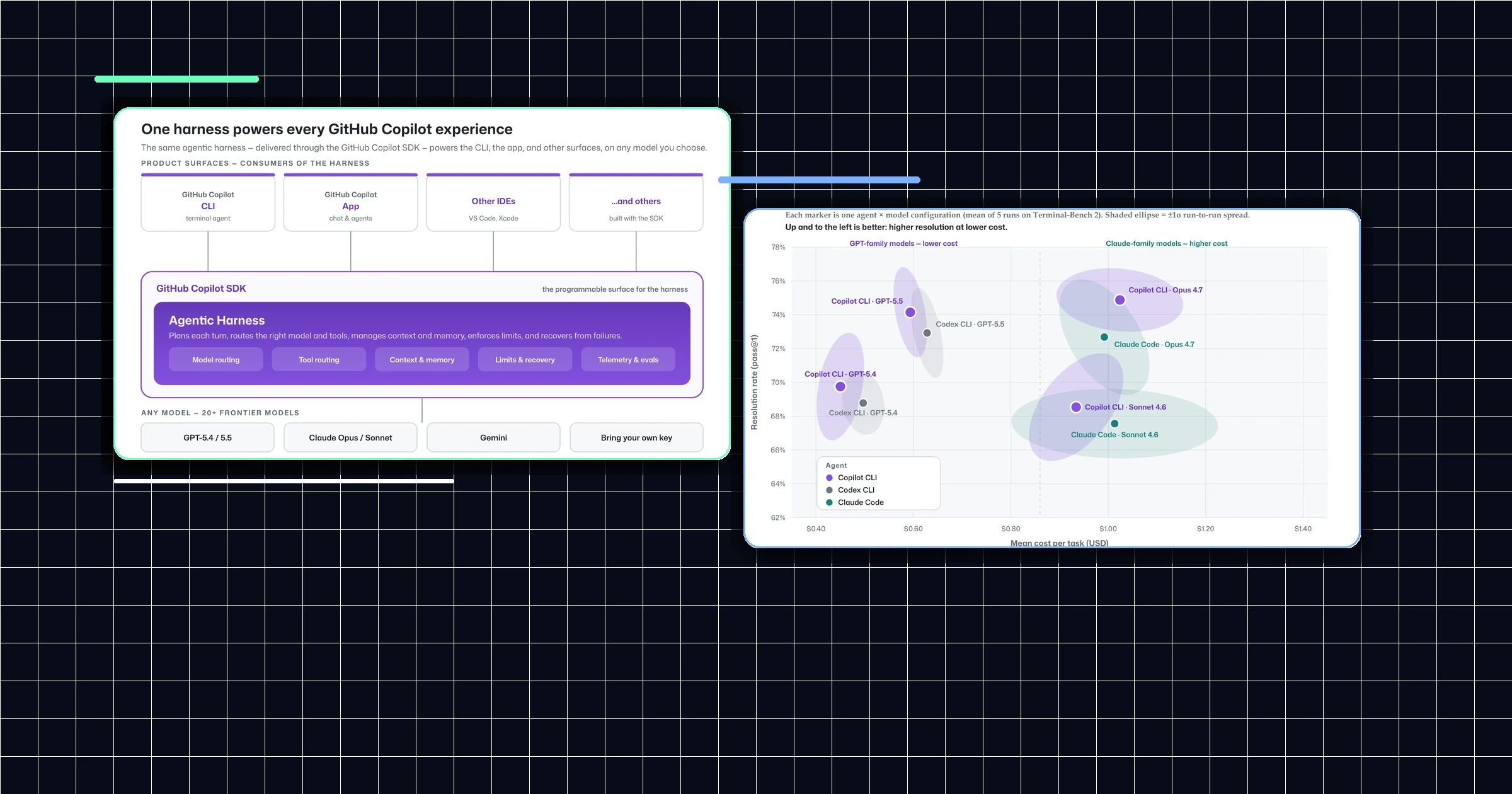
A lot of the coding-agent market is no longer about raw model quality in isolation. It is about the system around the model: routing, context assembly, tool use, retries, cost discipline, and enterprise control. That is exactly why GitHub’s recent harness argument matters here. The company has already been telling customers that the product moat is not only model access. It is the execution layer that decides how those models are actually used.
From GitHub’s side, Sonnet 5 strengthens that strategy. It adds a fresh Sonnet-class model with a strong coding reputation while keeping customers inside the Copilot control plane. From Anthropic’s side, the win is obvious too. Sonnet 5 is not limited to Claude’s own app or Anthropic’s own API channel. It shows up immediately inside one of the biggest AI-assisted software environments in the market.
The pricing looks better, but the migration is less simple than it seems
This is where the launch gets more interesting.
Anthropic did not just ship a cheaper model. It also changed how the model behaves and how developers are supposed to call it.
According to the Claude Platform release notes, adaptive thinking is now enabled by default on Sonnet 5. Manual extended thinking in the older thinking: {type: "enabled", budget_tokens: N} format is gone and now returns a 400 error. Anthropic also says that setting temperature, top_p, or top_k to non-default values now returns a 400 error as well.
That is not a tiny migration detail. For teams with wrappers, SDK abstractions, older prompts, or custom runtime controls, it means a version swap may not be clean at all.
There is another important wrinkle. Anthropic says Sonnet 5 uses a new tokenizer, and the same input may produce roughly 1.0x to 1.35x more tokens depending on content type. That means the lower launch pricing is real, but it does not eliminate the need to measure cost at the workflow level.
That is the same basic lesson AWS has been pushing from a different angle in its recent post on debugging production agents. The hard question is rarely just “which model scored higher.” The hard question is how the surrounding system behaves when tools, retries, session length, and token accumulation start compounding in production.
Copilot gets a stronger enterprise card to play
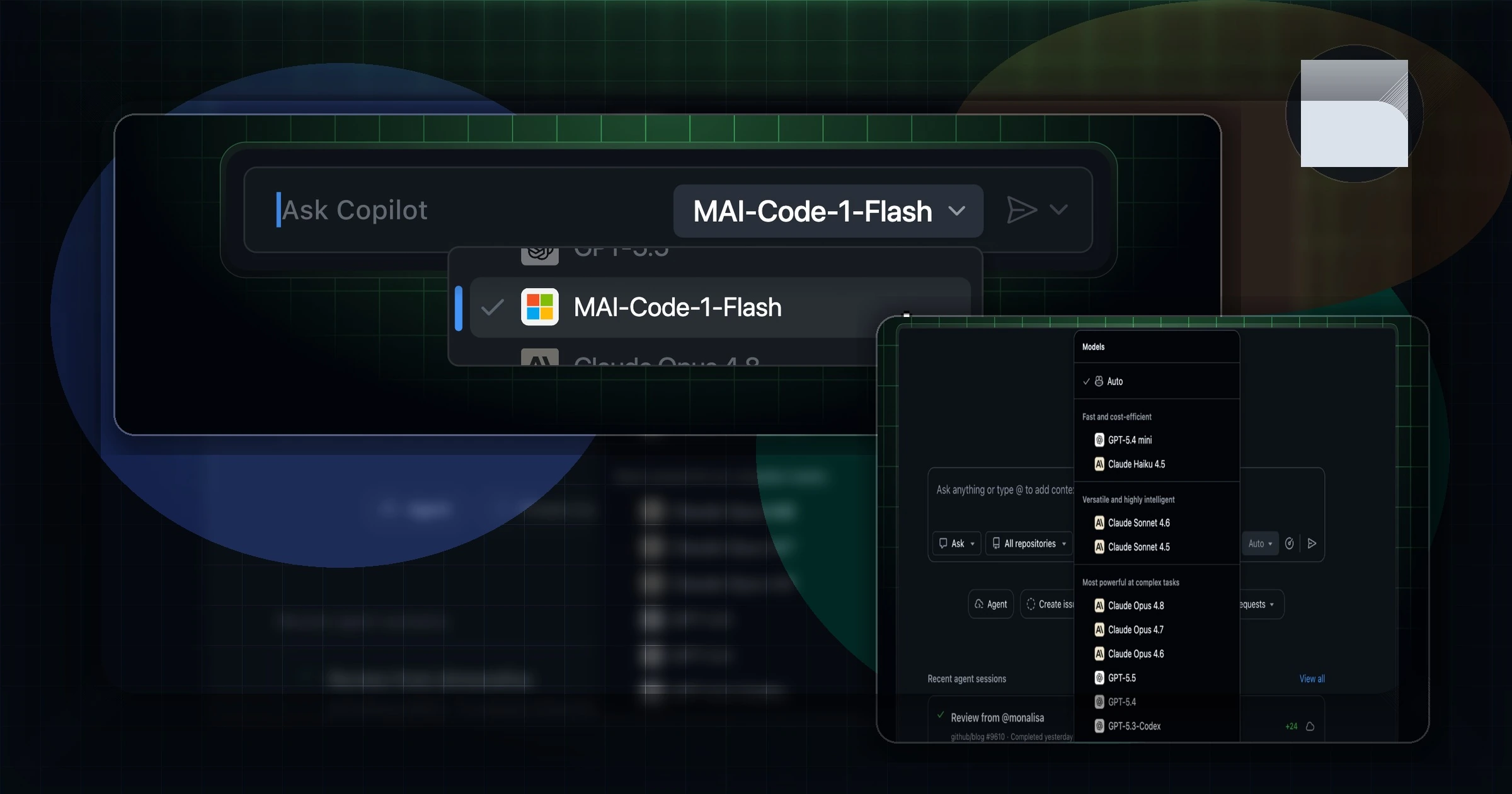
GitHub says Sonnet 5 is becoming available to Copilot Pro, Pro+, Max, Business, and Enterprise users. Rollout is gradual, but the direction is clear enough.
GitHub wants more of the model decision to happen inside Copilot rather than outside it.
That makes sense commercially. If a company already handles model policy and governance in Copilot, adding a new Sonnet model inside the same environment reduces friction. It also makes sense technically. If GitHub’s thesis is that harness quality matters as much as model selection, then a new model with strong CLI and coding credentials gives that thesis more room to prove itself.
The enterprise angle matters even more. GitHub says Sonnet 5 operates under Zero Data Retention in Copilot Business and Enterprise, and that administrators can enable it through model policy settings. For an individual developer, that may sound like checkbox language. For a larger team, it is part of the actual buying decision.
What changes for developers and engineering leaders now
For an individual developer, the update looks simple: one more strong option in the picker.
For an engineering leader, the real question is narrower and more practical. In which tasks does Sonnet 5 produce a better mix of speed, code quality, and operational cost?
If your workflows depend on multi-step autonomy, tool use, and longer execution chains, Sonnet 5 could become a very attractive option. Anthropic is clearly positioning it that way. But autonomy without control is still operational debt. That is the broader lesson behind recent agent-security and leakage cases such as MosaicLeaks. The more freedom an agent gets, the more important policy, observability, and containment become.
So the honest way to evaluate Sonnet 5 is not to switch everything blindly.
Measure it on long coding tasks. Measure prompt-heavy sessions. Measure time to a useful completion, not just answer quality in a demo. And check what breaks when older runtime assumptions are still buried inside internal tooling.
The right reading of this launch
Claude Sonnet 5 matters because it combines three things in one move.
It brings a new model. It launches with aggressive entry pricing. And it reaches GitHub Copilot immediately.
But the important part is not the headline. It is the operational effect.
This launch puts pressure on competing coding-agent stacks, reinforces Copilot’s multi-model strategy, and forces teams to think more carefully about real agent cost, model policy, and API migration risk.
If your takeaway is only “another good coding model is available,” you are missing the better half of the story.
The better half is this: the market is moving away from model bragging rights alone. The next advantage belongs to whoever can place these models inside a system that teams can govern, measure, and afford without surprises.
Sources
- Anthropic, “Introducing Claude Sonnet 5”
- Anthropic Docs, “Claude Platform Release Notes”
- GitHub Changelog, “Claude Sonnet 5 is generally available for GitHub Copilot”