The AI agent market has spent months obsessing over which model reasons better, which demo looks more autonomous and which benchmark sounds the most futuristic. NVIDIA’s most interesting move this week is about something far less glamorous: operations.
With NVIDIA Agent Toolkit, the company is not just pushing faster inference or another family of models. It is trying to package the layers that make agents usable inside real organizations: models, runtime, security guardrails, skills and a framework for tool-using execution.
That matters because the biggest problem with agents is no longer whether they can produce impressive outputs. The real problem is whether they can run with enough control, enough visibility and enough cost discipline to survive contact with enterprise reality.
That is the same broader shift we already saw when Google turned managed agents into a platform service. The market is moving away from “smart agent” theater and toward the stack that makes autonomous behavior governable.
NVIDIA is trying to reframe the conversation
The official NVIDIA blog post leans on familiar language about safer, faster and lower-cost digital coworkers. The interesting part is the architecture hiding behind the pitch.
NVIDIA describes Agent Toolkit as a modular base built from Nemotron models, the open OpenShell runtime, NemoClaw safety software, reusable skills and agent components such as AI-Q. Read that as a strategic move, not just a product bundle.
The company is signaling that the next wave of value in AI agents may not sit entirely inside the frontier model. It may sit in the operating layer that decides what the agent can access, how it reasons across tools, how much it costs to run and whether anyone can audit what happened afterward.
That is a much more important battle than the usual “who has the best demo” contest.
OpenShell is the least flashy part — and maybe the most important
If one piece deserves more attention than the rest, it is OpenShell.
NVIDIA presents it as a runtime that applies browser-style isolation principles to agent workflows. Each session gets its own sandbox. Resources are metered. Permissions are verified before actions execute. Filesystem, network and process boundaries can all be governed through policy.
That is the layer most agent discourse still avoids because it sounds operational instead of magical. But that is exactly why it matters.
Enterprise agent projects are not going to fail because demos are underwhelming. They are going to fail because agents with tool access can become expensive, opaque and risky very quickly. OpenShell is NVIDIA’s attempt to answer that problem with a runtime, not just a prompt trick.
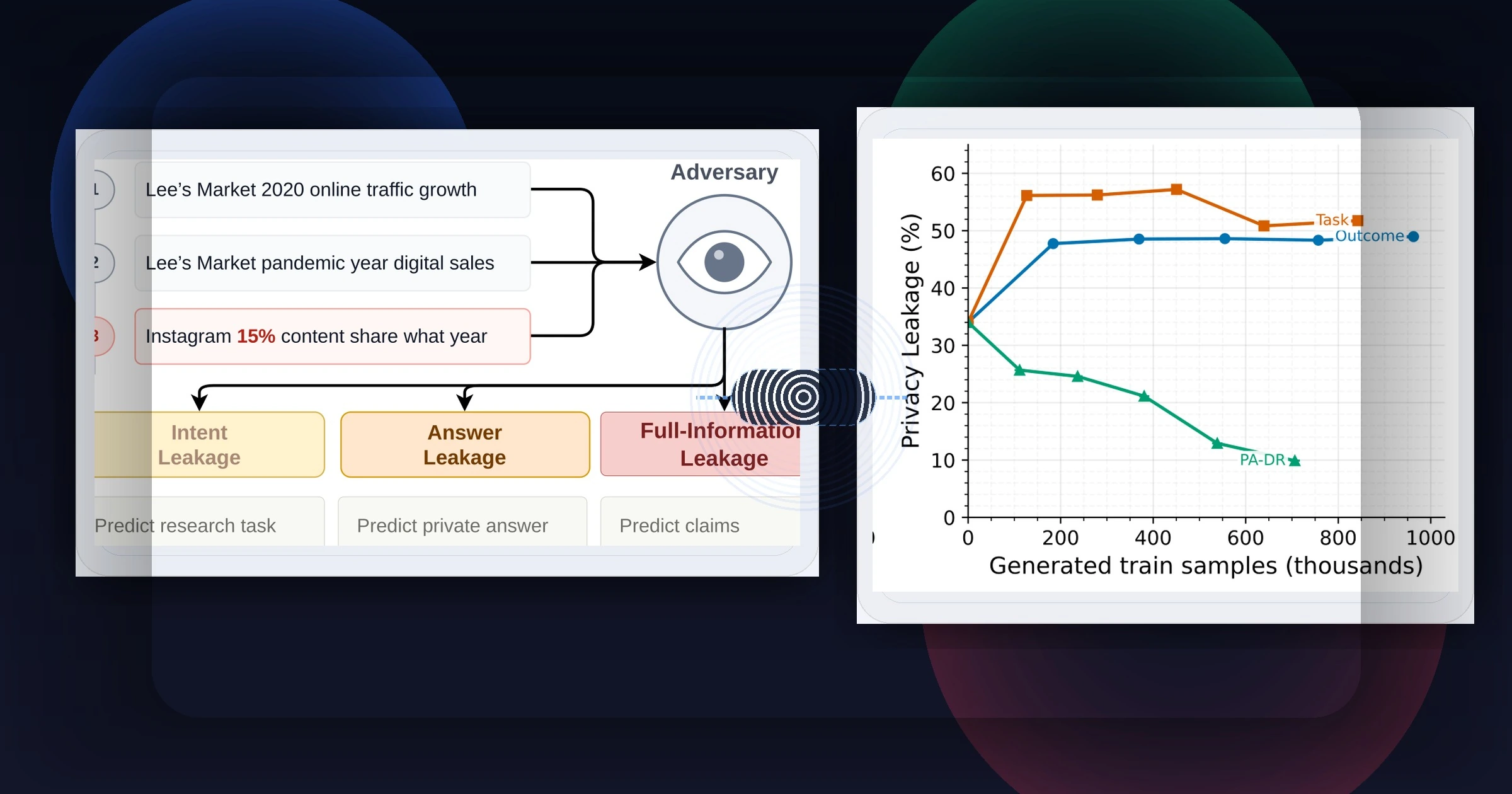
It also puts the announcement much closer to the concerns raised in MosaicLeaks and the security risks of deep research agents than to the usual assistant hype cycle. Once agents can search, execute, install and evolve, control becomes the core product.
NemoClaw suggests safety is moving into the center of the stack
The NemoClaw positioning reinforces that point. NVIDIA is not treating safety as a decorative feature added after the workflow already exists. It is treating safety as part of the deployable substrate.
That is a meaningful shift. Too many teams still build agents first and then try to bolt on network rules, file constraints, approvals and audit logs afterward. The result is usually brittle: the stack works in a narrow environment, but every extra permission creates new operational debt.
By putting policy-driven controls and safer long-running execution near the center of the story, NVIDIA is moving in the same direction we saw in Amazon Bedrock AgentCore’s native web search push. The useful question is no longer “can the agent do more?” It is “can the agent do more without becoming unmanageable?”
Nemotron and AI-Q are NVIDIA’s answer to the economics problem
The newsroom announcement adds another important layer: AI-Q combines frontier models for orchestration with open Nemotron models for research and task depth, and NVIDIA claims that setup can cut query costs by more than 50% while maintaining strong accuracy.
That matters because the economics of agents are starting to hurt. If every step in a chain of decisions depends on the most expensive model, the architecture becomes hard to justify outside premium use cases.
Enterprises do not just need smarter agents. They need systems that decide where expensive reasoning is worth paying for and where open models can carry more of the load. NVIDIA is effectively trying to provide that routing logic as part of the broader stack.
This is also where the announcement overlaps with what Hugging Face showed in its AI-assisted, human-reviewed weekly release pipeline. The real gains do not come from throwing one model at everything. They come from splitting a workflow more intelligently.
NVIDIA wants the operating layer, not necessarily the whole ecosystem
One of the smartest details in the blog post is the explicit claim that the toolkit can work with third-party harnesses and orchestration frameworks, including Hermes Agents and OpenClaw.
That changes how the strategy should be read.
NVIDIA does not appear to be betting solely on a closed assistant that wins through branding. It is trying to become the layer underneath other agent experiences: the runtime, the policy boundary, the model mix and the safety substrate that enterprise teams plug into regardless of which orchestration surface they prefer.
That is a stronger long-term position. If it works, NVIDIA can capture value even when developers choose different agent shells, different workflows and different UI conventions.
What this changes for developers and enterprises
For developers, the immediate promise is less handcrafted integration work. Instead of assembling models, runtime controls, policy enforcement and tooling from scratch every time, the stack starts to look more precomposed.
For enterprises, the pitch is even clearer. The hardest part of agent adoption is no longer proving that agents can complete a task. It is proving that they can do it with enough safety, observability and cost discipline to be trusted in production.
That is why this launch matters. NVIDIA is not really selling “AI agents” in the abstract. It is selling a more believable path from prototype to governed deployment.
None of this guarantees the stack will win. It does not magically remove complexity, either. But it shows where the market is maturing: away from intelligence in isolation, and toward autonomy that can actually be administered.
What to watch next
The real test is adoption, not launch language.
Watch whether OpenShell gains traction beyond staged demos, whether NemoClaw becomes a practical reference point for agent guardrails and whether the frontier-plus-Nemotron mix delivers meaningful savings without degrading quality too much.
It is also worth watching how open NVIDIA keeps this strategy. Too much control and developers will resist it. Too little differentiation and the stack risks looking like another interchangeable set of components.
Even before those answers arrive, the direction is already clear. NVIDIA understands that the next serious fight in AI agents will not be won only in the model layer, and not only in the chip layer either.
It will be won in the operating layer that makes autonomy manageable.
Sources
- NVIDIA Blog, “How Businesses Are Building Specialized AI They Can Trust”
- NVIDIA Newsroom, “NVIDIA Ignites the Next Industrial Revolution in Knowledge Work With Open Agent Development Platform”
- NVIDIA Build, “OpenShell”
- NVIDIA, “NemoClaw”
- NVIDIA, “Nemotron”