OpenAI’s latest move with AWS is easy to summarize in product terms: GPT-5.5, GPT-5.4, and Codex are now generally available through Amazon Bedrock, and Codex can be used through its app, CLI, and IDE integrations while routing inference through AWS. But the more interesting story is not catalog expansion. It is control.
For companies already standardized on AWS, this launch is less about getting access to another model endpoint and more about absorbing frontier AI into systems they already know how to buy, secure, audit, and operate. That changes the adoption equation in a way that matters far more than another distribution deal.
In practice, enterprise AI projects rarely fail because a model is unavailable. They fail because the surrounding organization cannot clear security review, cannot align procurement, cannot satisfy data-handling rules, or cannot fit new tooling into existing delivery processes. That is the gap this announcement is trying to close.
The headline facts are straightforward. Amazon Bedrock now offers GPT-5.5 and GPT-5.4 through the Responses API. AWS says customers pay the same per-token rate as they would directly through OpenAI, with no additional fees layered on top. Codex is also available on Amazon Bedrock, including through the Codex app, the Codex CLI, and IDE integrations for Visual Studio Code, JetBrains, and Xcode. For software teams, that means the coding agent can be used inside familiar developer surfaces without forcing model traffic outside the AWS environment chosen by the customer.
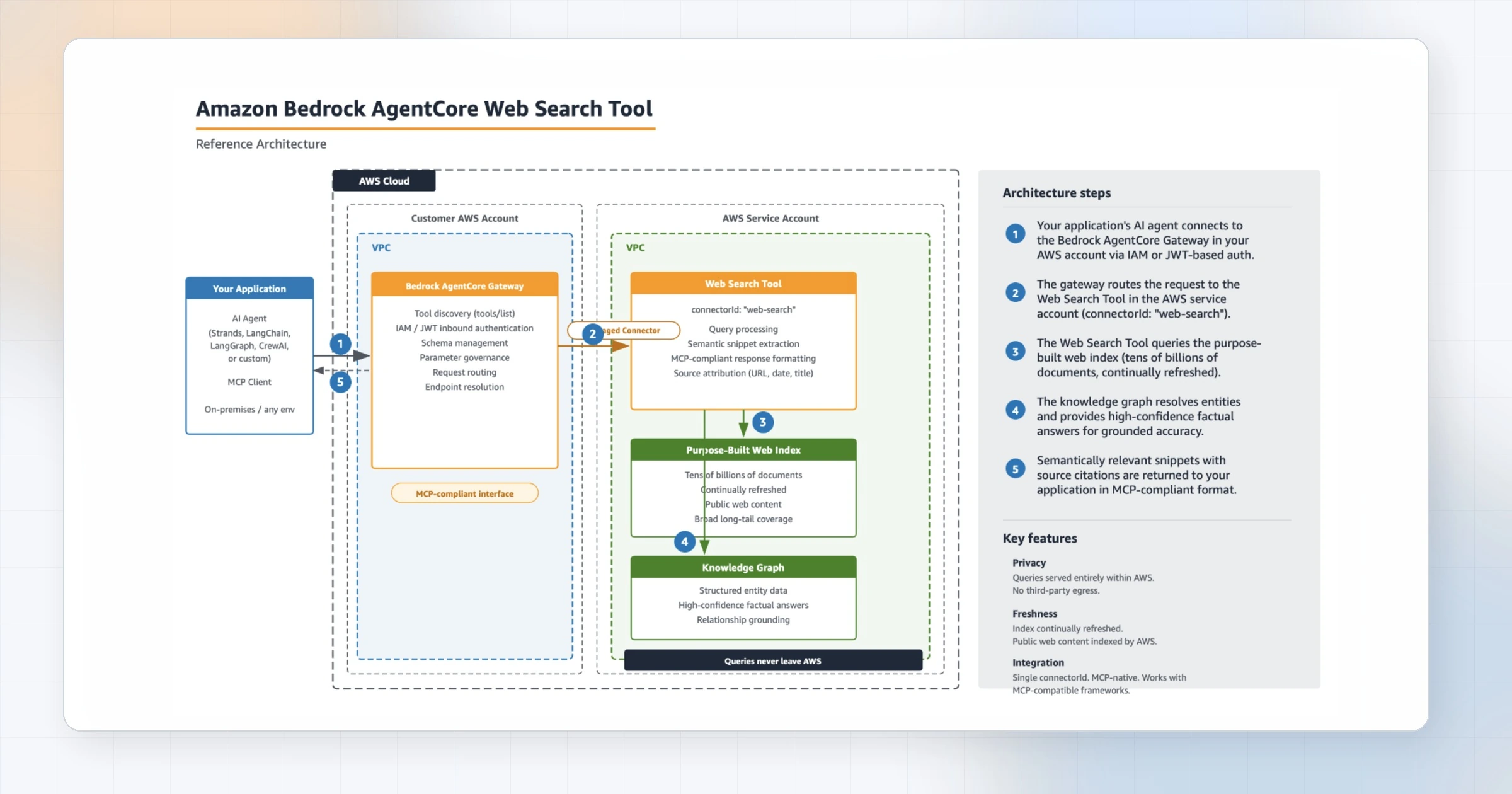
That last part matters more than it might sound. Enterprise buying decisions are often won or lost by where data flows and who can prove it. AWS emphasizes that Bedrock inherits the controls customers already use across their cloud estate: IAM permissions, VPC and PrivateLink isolation, KMS encryption, and CloudTrail audit logging. It also states that prompts and responses are not used to train models and are not shared with model providers. On the Codex side, OpenAI’s documentation highlights that inference stays within the selected AWS Region, a practical point for data residency requirements rather than a marketing abstraction.
This is why the launch should be read as workflow capture.
For years, frontier model vendors have competed on intelligence, latency, and developer experience. Those things still matter. But once the buyer becomes a large company rather than an individual developer, the battleground shifts. The crucial question becomes: can this fit into the way the organization already works?
AWS has a strong answer because it already owns so much of the surrounding machinery. The budget often already exists there. The security team already understands the primitives. The legal and compliance teams already have approved patterns. The platform engineering team already knows how to route traffic, segment environments, manage keys, and review logs. If OpenAI can appear inside that operating model, adoption becomes less of a special exception and more of an extension.
That is particularly relevant for AI coding tools. Codex is not just another chat window for developers. Used seriously, it touches repositories, tests, CI pipelines, internal APIs, documentation, and sometimes production-adjacent workflows. Those are exactly the areas where enterprise friction rises fast. A coding agent may be impressive in a demo, but security teams want to know where code and context are going, what identity model is in place, what logs exist, and how access can be constrained. Routing Codex through Amazon Bedrock gives IT and platform teams a governance story they can already explain internally.
The same logic applies to procurement. In theory, enterprises can buy directly from any major AI provider. In reality, centralizing spend through existing cloud channels is often much easier than opening a separate commercial track, negotiating new terms, and building new vendor oversight from scratch. “Available on AWS” therefore functions less as a convenience feature and more as a procurement accelerator.
There is also a deployment argument here. AWS describes Bedrock’s inference engine in operational rather than aspirational terms: isolated queues, automated capacity management, durable request state, and recovery behavior if hardware fails mid-call. Those are not the most glamorous details in the announcement, but they are the ones production teams care about. When a model moves from experimentation into business-critical workflows, reliability properties become part of the value proposition.
Another important point is the broader regulated-market framing. OpenAI’s announcement positions the AWS path across commercial environments and a wider push that includes GovCloud-oriented enterprise needs. The strategic signal is clear even if support details vary by service surface: OpenAI is not only targeting startups and isolated innovation teams. It is trying to become acceptable inside stricter public-sector and regulated-enterprise buying environments as well.
That enterprise appeal is obvious.
A pharmaceutical company evaluating GPT-5.5 for scientific knowledge work is not only asking whether the model is capable enough. It is asking whether the deployment can fit a responsible AI process, whether usage can be audited, whether access can be segmented, and whether the organization can scale usage without inventing new control planes. A software company exploring Codex is not only benchmarking code quality. It is deciding whether AI-assisted development can be introduced without breaking internal policies around repositories, data handling, and developer tooling.
This is why the most important sentence in the rollout may be the least flashy one: customers can use OpenAI through the workflows they already trust.
That framing also explains why same per-token pricing as direct OpenAI matters. It removes one obvious objection. If AWS had imposed a meaningful markup, companies might have faced a familiar tradeoff: better governance through Bedrock, or better economics through direct purchase. By preserving pricing parity at the token level, OpenAI and AWS reduce the penalty for choosing the operationally easier route.
The broader market implication is that frontier model access is becoming infrastructural. The differentiation is no longer only about who has the strongest model. It is also about who can embed those models most effectively into the enterprise substrate: identity, networking, compliance, billing, observability, and deployment.
From that perspective, the AWS launch is not just another checkbox in OpenAI’s cloud distribution strategy. It is an attempt to own a higher-value layer: the day-to-day operational path by which enterprises move from curiosity to production. That is where budgets get committed and where habits form.
For developers, the release means easier access to strong models and a coding agent across familiar tools. For enterprises, it means something more consequential: fewer organizational excuses to keep frontier AI stuck in pilot mode.
And that is the real significance of this announcement. OpenAI did not merely gain another place to sell tokens. It gained a path into the existing administrative bloodstream of the enterprise. Once a model fits procurement, security, governance, and deployment patterns already in place, adoption stops being a separate initiative and starts looking like standard infrastructure.
That is a much stronger position than simple distribution.