The lazy way to read Claude Opus 5 is to file it under one more high-end model launch.
The useful way is different.
The part that matters most for teams already shipping AI apps is not only the benchmark story. It is the operating package around the model. Opus 5 keeps Opus 4.8 pricing, lowers the minimum cacheable prompt to 512 tokens, makes room for automatic fallback when a safety classifier refuses a request, and lets developers change tools mid-conversation without blowing up the cache.
That matters because many teams have moved past abstract leaderboard talk. The real problem now is cost per task, blocked flows, cumulative latency, and how much runtime duct tape an agent needs before it becomes reliable in production.
The real advantage is not just intelligence. It is a calmer operating surface
Anthropic is positioning Opus 5 as a model that gets close to Fable 5 level capability at half the price. The list price stays at 5 dollars per million input tokens and 25 dollars per million output tokens, which keeps it aligned with Opus 4.8 and well below Fable 5.
That alone would make it interesting. But the more important part is that Anthropic did not frame Opus 5 as a raw model upgrade only. The release is tied to a friendlier production path.
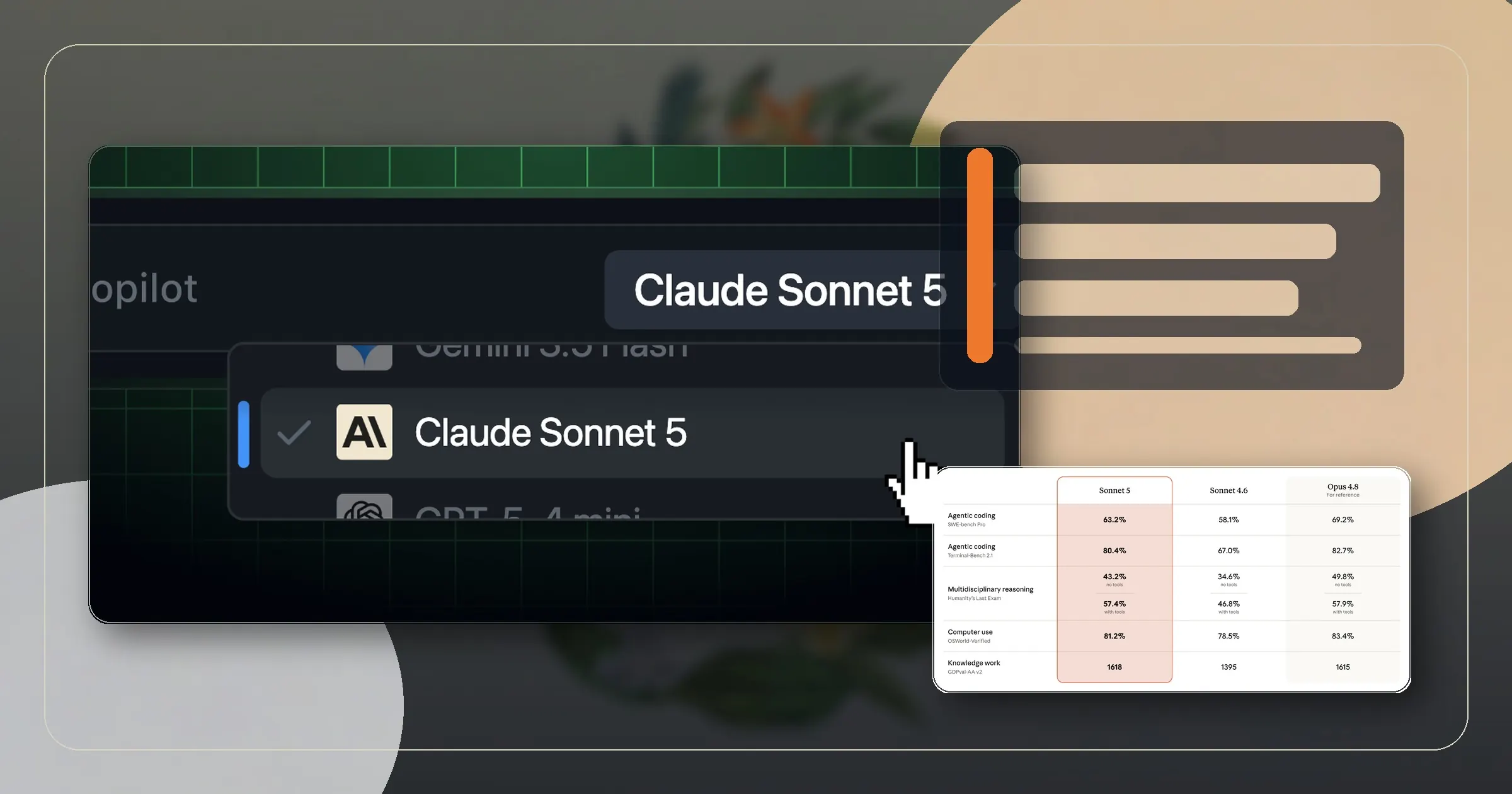
That is the same broader pattern that showed up in Claude Sonnet 5 landing in GitHub Copilot and changing the cost math for coding agents. In both cases, the meaningful story is not just “better model.” It is the operating layer around the model becoming more important than the release note itself.
Automatic fallback targets the most annoying failure mode, the request that quietly dies
Anthropic’s docs are explicit about something many builders still learn the hard way. In Claude Opus 5 and Claude Fable 5, a classifier refusal is not a traditional API error. It is a successful HTTP 200 response with stop_reason: "refusal".
That creates an ugly kind of failure. Your application may look healthy, but the user still gets nothing useful back.
This is where automatic fallback becomes practical. On the Claude API, you can send fallbacks: "default" with the server-side-fallback-2026-07-01 beta header and let Anthropic route the request to a recommended fallback model when the refusal category allows it. The final response already comes back with the model that actually served the turn.
For small teams, that removes retry glue. For larger teams, it removes part of the custom refusal-handling layer that used to catch the decline, choose another model, and replay the same request without losing the conversation.
It also changes how real cost should be read. If your app keeps hitting refusals and replaying work, the final bill is not only about the token price on the requested model. It is also about how often the system has to recover just to complete the task. That lines up with a point I recently made in the model routing cost discussion. Production cost rarely lives in the pricing table alone.
There is still an important limit here. Server-side fallback is not available on Amazon Bedrock, Google Cloud, or Microsoft Foundry. In those environments, teams still need client-side middleware or custom retry logic. So the feature is useful, but it is not universal.
The smaller cache threshold may save more money than the benchmark does
The most underrated change in the package may be this one. The minimum cacheable prompt on Opus 5 drops from 1,024 tokens to 512.
That sounds minor until you look at how many agent applications are actually structured. The repeated prefix is not always huge. Sometimes it is a compact system prompt, a clean set of tool definitions, and a short policy block. On Opus 4.8, part of that could still sit below the caching threshold. On Opus 5, much more of that common prefix can qualify.
The pricing angle matters because Anthropic charges cache reads at a fraction of standard input cost. In the pricing docs, cache hits are billed at 10 percent of the base input rate. In a workflow that reuses the same prefix all day, that stops being a technical curiosity and starts becoming a real budget lever.
That is why Opus 5 looks more compelling for long sessions, multi-step agents, and apps with meaningful context reuse. In short one-off requests with little reuse, the impact is much smaller.
Mid-conversation tool changes fix a hidden tax in agent workflows
Another practical piece of the launch sits in the tool-change story.
Before this, changing the tools array could invalidate the entire cached prefix because tool definitions sit early in the hashed request prefix. In agent workflows, that is painful. The agent starts with one tool surface, enters a later stage of the task, needs another tool, and the application pays again for the earlier context because the tool list changed.
With the mid-conversation-tool-changes-2026-07-01 beta, Anthropic now supports tool_addition and tool_removal inside a system message at the exact point where the change becomes relevant. The practical benefit is easy to understand. Teams can expose tools in phases without throwing away the cache they already paid for.
That fits a broader pattern I keep seeing across the AI infrastructure stack. The new value is less about the isolated component and more about how much friction it removes between layers. That was the whole point of the Spanner context-engine argument. Opus 5 feels similar. The release matters more when you look at the glue.
Where the upgrade makes the most sense right now
Opus 5 looks strongest for four kinds of teams.
First, teams dealing with legitimate work that still gets blocked often enough to create user-visible friction.
Second, apps with stable prompt prefixes and enough repetition that the lower cache threshold actually turns into reused input.
Third, agent workflows that change tools as a task progresses and want to keep cache efficiency intact.
Fourth, teams that already measure cost per completed task instead of only cost per call. Without that, it is hard to tell whether the upgrade improved operations or only improved the narrative around them.
Where migration still needs caution
None of this means an automatic win.
Anthropic’s migration guide also warns that Opus 5 enables adaptive thinking by default. If your runtime was disabling thinking and then pushing effort to xhigh or max, that configuration now breaks. On Opus 5, thinking: {type: "disabled"} only works up to high effort.
It also makes no sense to market this as a universal cost fix. If your product barely reuses context, never changes tools mid-session, and rarely hits refusals, the operational upside shrinks fast. In that case, the benchmark will impress more than the bottom line.
The old rule still holds. If you do not instrument latency, cache hit rate, retries, and the model that actually served the fallback, you are migrating blind.
The right way to read Claude Opus 5
The best question is no longer just whether Opus 5 is smarter.
The better question is whether it removes enough friction from your workflow to improve cost, predictability, and completion rate.
For many agent teams, the answer may be yes. Not only because the benchmark is stronger, but because the model arrives with fewer dead ends, more accessible caching, and a cleaner way to handle tool changes inside long-running sessions.
In the end, the most interesting thing about Opus 5 may not be that it looks more capable in the abstract.
It is that it looks less fragile at work.