At first, everyone is excited.
The agent reviews pull requests, suggests changes, catches technical problems early, and gives the team the feeling that development just got lighter and faster. It feels a little like magic. Product moves, engineers are happy, and the early demos look great.
Then the invoice shows up.
And somewhere between one line item and the next, there is a number nobody was really watching. It is not the subscription price. It is not even the model choice by itself. It is the quiet accumulation of tokens burned run after run, week after week, across the routines the team has already normalized.
That is the invisible cost of AI agents in production. It grows long before most teams notice it.
Why smart teams still get surprised
This usually does not happen because people were careless. It happens because most teams were never trained to think about token consumption as an operational metric.
We learn to watch uptime, latency, failure rates, cloud spend, and deployment health. Tokens often get treated as a secondary detail, something finance or platform engineering can look at later. But later arrives faster than expected.
When an agent runs once a week in a test environment, the numbers seem harmless. When it becomes part of the daily workflow — every pull request, every code review, every CI step, every automated handoff — what once looked negligible turns into a real line of spend.
It is like a faucet dripping overnight. You do not hear it in the middle of the day. But at the end of the month, it is right there on the bill.
The pattern GitHub called out matters
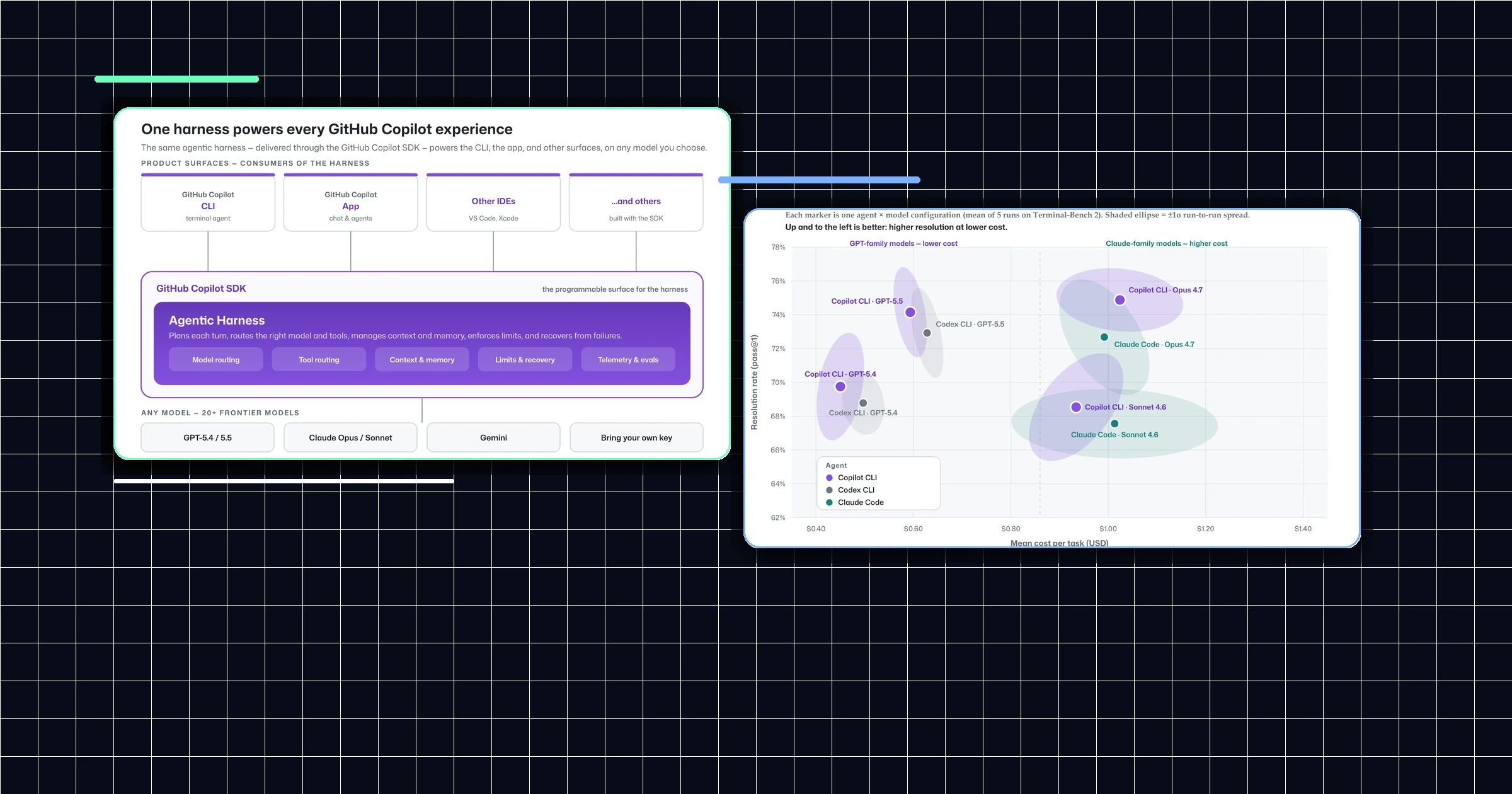
Recently, GitHub published a thoughtful piece about token efficiency in agentic workflows. What stood out was not a new model announcement or another Copilot feature reveal. The interesting part was far more practical: they looked at their own workflows and asked a simple question — where are we wasting tokens?
The answer was familiar.
Too much context. Repeated instructions. Tasks that were too large for a single call. Entire conversation histories being passed along every time, even when half of that information was irrelevant to the job at hand.
None of those mistakes are dramatic. That is exactly why they are expensive.
They usually come from habits that were fine when volume was small. A prompt grows because each new edge case adds another paragraph. A context window expands because nobody wants the agent to miss something important. A workflow stays monolithic because it was faster to implement as one large request instead of two smaller ones.
Individually, each choice feels reasonable. At scale, they become a leak.
What changes when you start measuring for real
The moment tokens become a first-class metric, uncomfortable truths appear.
That “complete and robust” prompt the team built so carefully may contain several paragraphs that never change the result. They remain there because of caution, tradition, or simple inertia.
That extra context included “just to be safe” may be unnecessary in most executions.
That big all-in-one task may be generating long, expensive responses with less consistency than a smaller, more structured workflow would produce.
This is not about blame. It is what happens when a system was designed to work, not necessarily to scale efficiently.
The good news is that the fix is usually straightforward. The bad news is that it is hard to do well without data.
If you are not tracking average tokens per run, cost per workflow, response length, acceptance rate, and how often humans still have to heavily edit the output, you are mostly optimizing by instinct. And instinct is rarely enough once usage becomes routine.
Efficiency is not the same as cutting corners
This is the misunderstanding that trips up a lot of teams.
The minute someone says “we need to reduce token usage,” the defensive reaction is often immediate: fine, but quality will drop. Sometimes that is true. Bad optimization absolutely exists.
But real efficiency is not about starving the model of the context it needs. It is about removing what adds no value.
There is a huge difference between giving an agent less than it needs and giving it exactly what it needs. The second is the goal.
Clear instructions usually outperform bloated instructions. Carefully selected context usually produces a more focused response than dumping everything into the prompt out of fear. Breaking a large task into shorter steps often creates more predictable results than asking for a sprawling answer in a single pass.
In practice, quality and efficiency often move together more than people expect. When the model has a cleaner task, the output is often better as well as cheaper.
How to start optimizing without breaking what already works
The wrong instinct is to redesign the whole system at once.
A better approach is to choose one workflow that already runs frequently and study what is actually happening there. How many tokens does it consume on average? How long does it take? Does the team accept the output as-is, or do people usually rewrite large parts of it before merging?
Once you have that baseline, change one variable at a time.
Shorten one instruction. Tighten the input context. Split one oversized task into two smaller ones. Add a reasonable ceiling to response length when the use case allows it.
Then measure again.
Compare the results. Decide with data, not intuition.
This sounds slower than a full redesign, but it is how you create improvements you can trust. Otherwise, you are just trading one form of uncertainty for another.
The real gain is not only financial
Something bigger happens when a team learns how to run AI agents efficiently.
The internal conversation changes.
Before, the tone is usually: “We need to limit usage so the budget does not get out of control.” Afterward, it becomes: “We can expand this safely because we understand what is happening.”
That is a meaningful shift.
The core problem was never just the price. It was the lack of visibility. When teams do not know what they are spending or why, the natural reaction is caution and restriction. When they do know, they can scale with much more confidence.
At that point, the agent stops being an exciting tool that people use carefully and starts becoming a dependable operating process the team actually wants to expand.
One last thing
The AI conversation is maturing.
It is moving away from the phase of asking which model looks most impressive this week and toward a more important question: how do we operate these systems sustainably?
Teams that learn this now will have an advantage that is more practical than flashy. Not because they found a secret trick, but because they built operational discipline while everyone else was still running on excitement.
And in day-to-day engineering, that makes all the difference.
Source: GitHub Blog — Improving token efficiency in GitHub agentic workflows